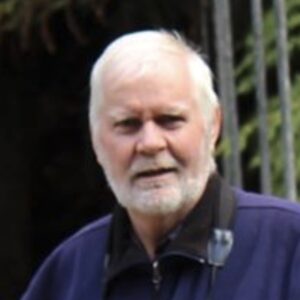


A sermon on Genesis 28:10-19a; Psalm 139:1-12, 23-24; and Romans 8:12-25 by Geoff Leslie
I heard of a farmer who was in Maine, in the northern USA, which gets very heavy snow all winter. When the snow melts, the topsoil is shifted revealing new annoying rocks which farmers traditionally spent time and much effort methodically removing those rocks to plant crops. This farmer had been away and when he came back and the snow melted exposing the rocks he asked, maybe if instead of removing them, I plant a tomato plant beside each one, it will get more heat and more stability from the rock. He found that his tomatoes were bigger, tastier, and a fortnight earlier than everyone else’s because they used that extra warmth.
The rock is a symbol of human encounter with nature.
- The rock is a problem to be dealt with. It litters the landscape, obstructs mobility, hinders agriculture. Rock symbolises desert, barrenness, inhospitableness. So we pile them into heaps or transport them to other places. They have no self-importance and no importance to us.
- OR the rock is a resource. We can find a use for it if we’re clever. It can be mined or modified, used in building, or in fortification, or in warfare, its natural qualities used to benefit us.
- But in this Jacob story, he encounters rocks. At first they are a problem, hindering navigation, then he finds a use for one as a pillow, it becomes a resource. But when he wakes up, he discovers that the rock is a place of revelation. This rock turns out to be a doorway to heaven, a portal to the Presence. Jacob takes it and anoints it and honours it and makes a vow on it.
Jacob says I have set up this stone as a matsevah – a standing stone, from the word for a standing post or a pillar, a monument. It becomes a Standing Stone. There are 50,000 standing stones in the British Isles alone. Every one of them marks a place that some ancient race found to be holy.
Probably not a small pillow-sized rock but a decent menhir, an obelisk, something he would have leant against not tucked under his head. Jacob is depicted as exceptionally strong in a couple of stories. Imagine him wrestling this slab into an upright position, lodging it as a standing stone, then solemnly anointing it.
When we visited a circle of standing stones on Bodmin Moor in Cornwall our children were quite small and I told them if they ran around inside the circle they might find a portal to another world. They concocted various rituals and approaches but nothing worked.
But it worked for Jacob. He lay on this unconsecrated stone and found it was a doorway, a stairway to heaven. It was a holy place where God appeared, and he set up the Standing Stone and gave it a sacred name – Beth-el, house of God. Don’t you wish nature was always a stairway to heaven? Don’t you come to the river or the sea or the mountain or the fern-glade and hear the echo of a song and you think I wish I could read the signs, hear the tune, find the spiritual presence in this place?
Jacob’s encounter with the holy in this desolate place changed his life and gave it meaning. For as well as seeing a ladder to heaven, God appeared to him and gave him generous and wonderful promises. God wanted to bless every family on earth and the method chosen was to start with the family of Abraham and through them to express God’s love for all humanity. His encounter with heaven gave his life a new purpose.
What is meant by the word heaven?
- Not the top tier of a 3-tier cosmos (Underworld, earth, heaven) as Jacob probably thought. Many people still today speak of heaven as a place just above the sky where the dead look down on us, where the circle is unbroken, where our loved ones reminisce. We have better knowledge of earth and space. There is no such place.
- Not a destiny for humans. The Bible does not actually teach that humans are going to heaven. As we see in the beautiful reading from Romans 8, God’s plan is to restore and redeem creation on planet Earth, including our bodies in the resurrection.
- Not really ‘where God dwells’ because God is everywhere as Psalm 139 made plain – in heaven, in hell and everywhere on earth.
- A reference to the spiritual realm, or even the awareness of God’s presence. This is how we use it in our daily prayer liturgies. We ‘join in the priesthood of Christ praying night and day until earth and heaven are reconciled.’ -That would mean that here on earth we would experience heaven, the presence of God, the rich spiritual understanding of life in the everyday. Or in Matins we say, ‘’may heaven open wide before us, above us and around us that we may see and honour your presence in all the things of earth this day.’ This is the way we encounter heaven today.
Of course in common speech, heaven is everything nice, from dancing cheek to cheek, to eating chocolate. Or sometimes a genuine hope that ordinary life can enter a higher dimension, ecstasy, mystery, bliss, joy, transcendence.
Which brings me to Led Zeppelin’s famous song using Jacob’s image called Stairway to Heaven. Every guitarist back in my youth learned the opening riff but we were warned that it might be a song about the occult and Christians shouldn’t listen to it.
I listened to it again this week. The lyrics are very interesting. It basically posits that ‘There’s a lady who’s sure all that glitters is gold
And she’s buying a stairway to Heaven When she gets there she knows, if the stores are all closed With a word she can get what she came for.’
This lady represents our world of materialism. If we have the money we can buy happiness and solve the mystery of life. But the song wants to suggest that life isn’t like that, you can’t buy a stairway to heaven and the lady or the singer encounters all these signs and metaphors that suggest there is another path we can take which might lead us to deeper truth and genuine spiritual enlightenment.
So the song employs all these strange images:
In a tree by the brook, there’s a songbird who sings
Sometimes all of our thoughts are misgiven
There’s a feeling I get when I look to the West
And my spirit is crying for leaving… smoke through the trees
And a new day will dawn for those who stand long
And the forests will echo with laughter
There’s a ‘piper’ who is ‘calling you to join him’. So, dear materialistic lady, can you hear the wind blow, did you know that your stairway lies on the whispering wind?
The song is making a good point. Materialism and money and all that glitters will not satisfy the human heart; only God, the spiritual dimension can meet our deep yearnings. There are two paths you can go by…there’s still time to change the road you’re on. But why is it hard to find that other path. Why can’t we find God in nature? Why has it become so disenchanted?
Firstly, we live in a world of so much noise. Everyone is constantly tuned in to the news and to the hum of the internet and machines and speed and restlessness. We will struggle to hear the voice of God till we make time to turn it all off.
Secondly, the whole modern enterprise of life has been built on a scientific approach which has disenchanted the world. Science succeeded by ruling out any notion of fairies or leprechauns or gods or spirits, and tried to explain things by good observation in the material realm. We have disciplined our heads to look at the world asking scientific and commercial questions. In the ancient world and in the indigenous world there is no distinction between nature and the spirit. But for modern people, nature is a resource, not a stairway to heaven. Everything is analysed and measured and explained and bought and sold.
People of faith have to fight against that. Stan Grant said, ‘The first steps into science will make you an atheist – but God waits at the bottom of the path.’ It is true. Whilst science demands that we observe and think without bringing God into it, when we give our attention – that precious gift – to an aspect of nature long enough, we sense the doorway to transcendence, the mystery and wonder of God through nature.
I often walk in nature, but sometimes I am a scientist (or a twitcher), caught up with the earnestness of observation and learning, and I get home and think, ‘was I aware of God’s glory in the rustling grass, the birdsong, the majesty of the trees? Or did I miss it?
How do we discover the wonder, the mystery, the divinity of nature?
We need to remind ourselves that it is God’s creation, blot out the noise, pay attention, declare that everything we can see is God’s and has God’s fingerprints. Then we can ask the Holy Spirit to make it come alive to us. Like the beautiful old hymn:
This is my Father’s world:
The birds their carols raise,
The morning light, the lily white,
Declare their Maker’s praise.
This is my Father’s world:
He shines in all that’s fair;
In the rustling grass I hear Him pass,
He speaks to me everywhere.
But there is a third verse in that hymn that points to something even more profound and it refers to the reading we had from Romans.
This is my Father’s world:
Oh, let me ne’er forget
That though the wrong seems oft so strong,
God is the ruler yet.
This is my Father’s world, The battle is not done:
Jesus who died shall be satisfied, And earth and Heav’n be one.
The much-loved Psalm 139 tells us that God knows us intimately, there is nowhere we can go where God is not with us and that we have amazing bodies, – we are fearfully and wonderfully made. God is with us in all our suffering, knowing us and nurturing us every day of our lives.
And yet we suffer, with sickness, disability and we die. We cannot ignore the suffering of this life when our church is so conscious of one of our members struggling with cancer. In Romans 8 Paul says Our bodies are groaning along with the rest of this gorgeous created world. It is heart-breaking, the grief we sometimes feel is a crushing burden we can hardly bear.
But God knows this and entered our broken world and took on our suffering because, so Paul believes, God has a future for us and for this world. It’s called the new creation, it’s called redemption, it’s called resurrection, apokatastasis – the renewal of all things. It will be the final bringing together of heaven and earth as one.
And God has given us the Holy Spirit to awaken our spirits, to illumine our minds, to strengthen heavy hearts, believing that:
Jesus who died shall be satisfied and bring all things together in Christ.
That nothing can separate us from the love of God
That even when we are weak and mute and our faith is struggling, God’s spirit prays through us and for us with groans that cannot be uttered.
That Jesus didn’t die to help me be a more moral and holy person, but to invite me to participate in the renewal, the promise, the hope, the assurance that there will be redemption, there will be a new creation.
All creation is groaning and longing for the day of new creation, and in the same way, our old groaning bodies will be redeemed, and the Holy Spirit is a downpayment on that promise. Paul uses the word ‘Αρραβων 3 times in his writings, including here; it means that the Spirit is the guarantee, the deposit, the first instalment of the new creation which is promised.
So the New Testament has no need for a stairway to heaven. The dream is that we experience something of heaven now. May heaven open wide before us and above us and around us this day that we may see your presence in all the things of earth this day. It urges a merger between heaven and earth, not a mystical add-on, nor a separate experience that we only encounter in worship or meditation, though such things are excellent portals, but a daily experience of awareness, of reassurance of hope and Presence in all the varied events of our lives.
Then, even a rock can become a portal to the presence of God, our bodies – so fearfully and wonderfully made but so subject to the whims of fortune – can come alive through the Holy Spirit, become Temples of the Holy Spirit, just as ordinary bread and wine can become the sacraments that lead us into real communion with God.
It is achieved by reminding ourselves – naming the Word of God about – who we are, what nature is, what our future is, who God is. And inviting the Holy Spirit to come and make the words of faith into our real experience.
This is my Father’s world and I rest me in the thought. The battle is not done; Jesus who died shall be satisfied and Earth and Heaven will be one. We don’t need a stairway to heaven, we need eyes to see heaven before us, above us and around us in all the things of earth.