The Courage to Sink
Modern slavery, a half-hearted rescue, and a sinking disciple: a sermon on what makes a response to injustice faithful, not just felt.




Modern slavery, a half-hearted rescue, and a sinking disciple: a sermon on what makes a response to injustice faithful, not just felt.

Paul grieves for Israel rather than standing apart in judgement – and asks what it would cost us to stop pointing the finger only outward.

When grief leaves us wordless and a hard parable unsettles us, Jesus promises that nothing – not even death – can separate us from God’s love.

We don’t need a stairway to heaven. We need eyes to see it already here, in nature, in the body, in ordinary life.

Sowing without sorting the soil first: reckless, generous welcome amid addiction, loss, and quiet hope.

Being “inclusive” doesn’t end the old habit of exclusion – it just relocates it. Jesus offers a different yoke instead.

Fear-driven religion and fear-driven politics run on the same engine. Paul knew it. Abraham discovered it. Grace is the only thing that breaks the cycle.

Faith is not a mental exercise — it’s the reaching, grasping, hoping of beggars who trust that God’s grace will prevail.
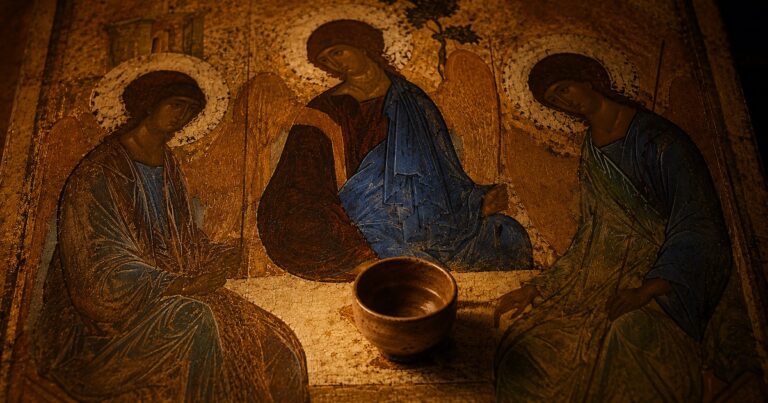
An ancient icon of the Trinity shows us a table of radical hospitality — and calls us not just to sit at it, but to become it.

Jesus offers living water to a world sold counterfeit spirits — but bad experiences with cheap substitutes needn’t put us off the real thing.