
What we believe (or mostly do our best to believe!)
Baptists do not recognise any single statement of faith as definitive and permanently authoritative, and therefore it is impossible to say what all Baptists believe on anything. The same is true of our church. Although there are many things that many people in our church would agree on, there is probably very little on which every single one of them would confidently agree. The statements that are included below are therefore not required beliefs for church members, or even necessarily a consensus view.
Anyone who wants to slot this church neatly into a theological pigeonhole — somewhere on the spectrum from liberalism to fundamentalism — will probably be frustrated. Much of what passes for “liberalism” or “progressive Christianity” seems to us to be timid, vacuous, and devoid of the boldness and transformative power we have encountered in Jesus. And much of what passes for “fundamentalism” or “conservative evangelicalism” seems to us to be aggressive, hostile, and devoid of the joy, mercy and hospitality that so clearly characterised Jesus and his ministry. Attempts to occupy a “middle ground” so often end up being wishy-washy and pointless. So some who visit and worship with us are surprised by how orthodox and biblical we are in the ways we express our beliefs and address ourselves to God in prayer, while others are equally surprised by the dissenting and non-conformist positions we express on some controversial social issues — especially around the inclusion of those who have often been rejected and alienated by the church. We just think we are following Jesus, as best we can.

Statements of Faith
We believe in God, the Father almighty,
creator of heaven and earth.
We believe in Jesus Christ,
God’s only Son, our Lord,
who was conceived by the Holy Spirit,
born of the Virgin Mary,
suffered under Pontius Pilate,
was crucified, died, and was buried;
he descended to the dead.
On the third day he rose again;
he ascended into heaven,
he is seated at the right hand of the Father,
and he will come to judge the living and the dead.
We believe in the Holy Spirit,
the holy catholic Church,
the communion of saints,
the forgiveness of sins,
the resurrection of the body,
and the life everlasting. Amen.
Baptists using the Creed?
When the first Baptist World Alliance Congress met in London in 1905, its first president Alexander Maclaren invited those present to recite the Apostles’ Creed together — “not as a piece of coercion or discipline, but as a simple acknowledgement of where we stand and what we believe.” The whole gathering rose and recited it together. A century later, the 2005 BWA Congress in Birmingham did the same, with delegates declaring it “an impressive, unifying and glorious thing to do together, as Baptists.”
We believe in God, who made the world
and reaches out to it
with a love fierce and passionate, tender and kind.
We believe in Jesus the Christ
— God revealed in a human life.
He touched the untouchable,
pardoned the unforgivable,
and unmasked the powers that enslave us.
In fear and arrogance
we cast him, lifeless, into the grave,
and with him went our hopes of salvation.
Raised by God,
he is parting the sea of evil and despair
and leading us across
into the land of freedom and promise.
We believe in the Holy Spirit
— God’s mysterious presence with us —
whose breathing gives life;
whose fire purges and renews;
whose wisdom surprises, prompts and questions,
awakening courage, humour and hope.
We believe in ourselves;
made in the image of God
and growing to wholeness in Christ.
Gathered by the Spirit,
we have been baptised into a common life:
a life laid open to all;
overflowing with love and mercy;
richer than mind can measure,
but appearing foolish to the world.
And we trust that the foolishness of God
will prove wiser than the wisdom of the world,
and that the suffering of God will heal the earth
and fulfil our hopes of justice and peace.
What makes a Baptist church Baptist?
You don’t need to know anything about what is distinctive of Baptists to be part of this church, but perhaps you are curious. If so, this section is for you. In Australia almost all Baptist churches belong to the Baptist Union of Australia and to the various state unions. In other parts of the world there are many different Baptist groupings, but most are affiliated with the Baptist World Alliance. There are also some independent churches who call themselves Baptist without being affiliated with anyone. So what does it mean to be a Baptist? The following things are important distinguishing features of Baptist practice:
There is a strong emphasis on personal faith and active commitment. Since their beginnings Baptists have said that you cannot be a Christian just by birth or affiliation. A person becomes a Christian on the basis of their own free decision to trust Jesus Christ and commit themselves to following him in company with his people. This is the reason that Baptists only baptise those who have made their own decision to follow Jesus and unite themselves to his church.
Baptist churches believe in the freedom of the local church, because we believe that God relates directly to each congregation and that therefore the best people to discern what God wants a particular congregation to do are the members of that congregation. This means that the highest human authority in the church is a meeting of its members, gathered to prayerfully discern God’s leading. Neither the Baptist Union nor any individual leader can overrule a decision of the church meeting.
Baptists believe strongly in religious freedom and argue that no religious group should be either persecuted or favoured by the state. We have always held that if the church becomes too closely related to or identified with the government, the church’s prophetic voice will be compromised.
Baptists are part of the free church tradition, which means that they do not impose any single standard of belief or pattern of worship on their members. Although many Baptist churches may have settled patterns, it would be very un-Baptist to say that any one pattern was the only Christian pattern. That’s why you can walk into two different Baptist churches and think they were from different planets!
Throughout their history, Baptists have always held that the human mind can never comprehend the extent of God’s truth, and have therefore said that no formal creed can be the last word on belief — because the Holy Spirit is always leading people into new areas of understanding and action. On the other hand, Baptists have probably produced more Confessions of Faith than any other group of Christians, and as you may have noticed, even we — a single small congregation — felt the need for three statements above rather than one. The readiness with which Baptists have altered their Confessions is a strong indication that they never intended them to bind the conscience or the understanding of a believer. They were intended to be an understanding, not the definitive understanding of the Christian faith.
What is now called the Doctrinal Basis of the Baptist Union of Victoria was adopted by the Annual Assembly in 1888 to fulfil a legal requirement to safeguard the trusts of the Union. This statement, and the interpretative addition known as the Principles and Ideals of the Baptist Faith, were never intended to represent the total understanding of Victorian Baptists of the whole counsel of God. This church accepts them as part of a long tradition of expressions of Christian faith and does not require assent to them from anybody.
If you would like to explore more about the history, traditions and distinctives of the Baptist churches, the following resources are helpful. They range from accessible introductions to more substantial academic explorations. Printed titles can be found through your library or preferred bookseller using the ISBN numbers provided.
Being Baptist Together: A Series of Small Group Studies Exploring Baptist Identity, by Nathan Nettleton (2026). A series of ten studies written for small group use, exploring the distinctive convictions of Baptist life from the inside — what they mean for spirituality, worship, community, and engagement with the world. Accessible and practically oriented, it is a good first step for anyone who wants to go deeper than the brief introduction above.
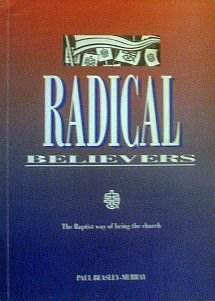
Radical Believers: The Baptist way of being the church, by Paul Beasley-Murray (Baptist Union of Great Britain, 1992). Written by a leading British Baptist, this 128-page book is easy to read and an excellent introduction to the distinctive emphases that are usual among Baptists. ISBN 978-0-901472-38-0. Click the image for a PDF version of the whole book.
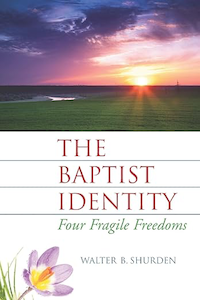
The Baptist Identity: Four Fragile Freedoms, by Walter B. Shurden (Macon GA: Smyth & Helwys, 1993). Another short and excellent introduction to the distinctives of Baptist thinking from a fine Baptist scholar. ISBN 978-1-880837-20-7.
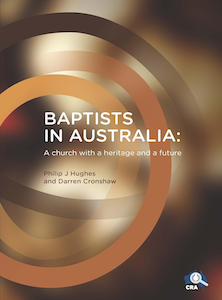
Baptists in Australia: A Church with a Heritage and a Future, by Philip J. Hughes (Canberra: Australian Government Publishing Service, 1996). Part of a series profiling religious communities in Australia, this book contains chapters on Baptist history, beliefs and practices, and their profile in Australia. ISBN 0-644-35791-6.
An updated digital edition with additional material by Darren Cronshaw is also available as an ebook (Christian Research Association, 2013).
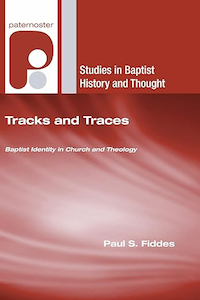
Tracks and Traces: Baptist Identity in Church and Theology, by Paul S. Fiddes (Carlisle: Paternoster, 2003). A more comprehensive and academic exploration of the territory from one of the finest British Baptist theologians, for those who want to go deeper. ISBN 978-1-84227-120-9.
Beliefs about the Bible
The following views are not necessarily representative of everyone in this church, but perhaps give something of the flavour of our collected understandings.
The scriptures of the Hebrew Bible and the New Testament were written by people who were inspired by God. They record the perceptions of those inspired people about their experience of life and God’s influential action in it. The scriptures that have been accepted into the Bible have been given that authority in the church because of the recognition of their sacramental power to teach truth, prompt transformation, evoke faith, and inspire faithful action in the lives of their hearers.
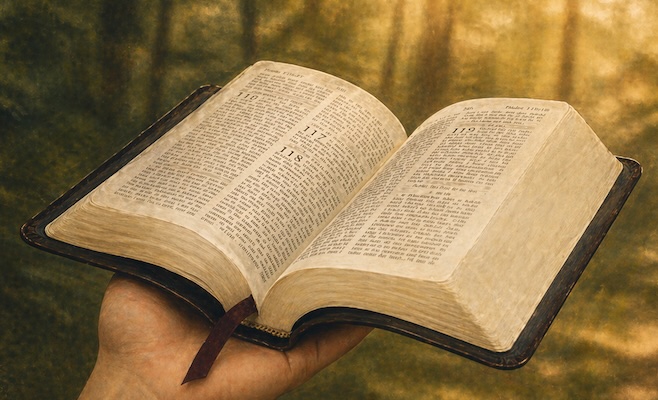
Reading the scriptures is a sacramental action. The Bible is not in itself the Word of God — Jesus Christ is the Word of God — but his witness and his voice are made sacramentally present to us when the scriptures are read and heard. The Bible has no magical properties; it is absolutely powerless unless it is read and heard. But when it is read, it has the power to become the voice of God leading us on in the journey into faith and life.
The Bible is the primary witness to God’s self-revelation in the world. It is not the primary revelation itself, but the primary witness to the creative and redemptive events in which God has disclosed himself to us. As the primary witness, it is the standard by which we interpret our perceptions of what God is doing in the world now and how God is calling us to respond. All that we do and say is evaluated in light of the truth we are learning through the Bible, and must be able to be shown to be in continuity with its witness.
Beliefs about Jesus
Most of us believe that Jesus of Nazareth was not only an extraordinarily inspiring human being, but was God present among us. The most amazing thing about that is not that Jesus is God, but that God is Jesus — that if we want to know what God is like, the answer is Jesus. That means that the core of Christianity is to be found in the life, ministry and teachings of Jesus. Jesus explicitly told us that the two most important teachings in the whole Bible are loving God and loving all people, that those two things are inseparable, and that everything else can be worked out by applying those two teachings fearlessly, joyously, and without compromise. Jesus’s ‘Sermon on the Mount’ is the longest single example of his teaching that has been preserved, and it is an extended reflection on the applications of what he said about love. We regard it as a kind of Christianity 101.
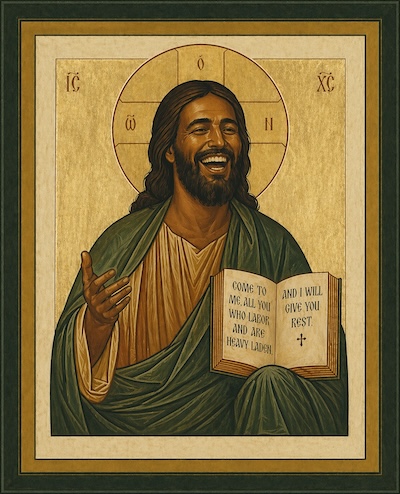
Jesus was killed because the authorities of his day regarded his uncompromising and prophetic practice of boundary-breaking love as a threat to their power and prestige. His execution showed how easily human crusades for righteousness mutate into scapegoating and violence, even towards the most innocent and loving. God raised Jesus back to life, not only vindicating him, but opening a pathway on which we can follow him, away from our captivity to the cycles of retribution and fear, and on into the life of freedom in the wide open spaces of God’s love — the life for which we were created.
Some things we don’t believe
There are some things that some of our fellow Baptists and evangelicals believe that most of us in this church no longer believe. We don’t condemn those who still hold these views, and we love and respect them as partners in the life of Christ — but we have come to believe that these things are neither true nor healthy.
We don’t believe in an angry, violent God. We don’t believe that God’s response to human failing is furious rage and a compulsion to punish. We don’t believe that God has any desire or willingness to inflict eternal torment on anyone.
Because Jesus and the biblical prophets repeatedly tell us that “God desires mercy, not sacrifice”, we do not believe that the death of Jesus was a sacrifice demanded or required to appease God. It was a sacrifice to appease an angry human mob. The God we have encountered in Jesus does not have to first take out his violent anger on someone, even an innocent victim, before being able or willing to forgive. God is love — consistently and infinitely. If you have been taught the modern evangelical doctrine known as ‘penal substitutionary atonement’, and you want to explore how what we are saying here relates to it, you might like to read this sermon.
We do not believe that what God most cares about is behavioural conformity with a particular standard of personal morality — that God only likes you if you meet the required behavioural performance indicators. Christian behaviour is about being shaped by the example of Jesus. Rather than being something we work at in order to earn God’s favour, it grows from the experience of discovering that God really likes us, and from finding ourselves immersed in God’s healing and liberating love.
We believe that Jesus came precisely to set us free from these kinds of toxic misunderstandings of God.
Beliefs about praying with icons
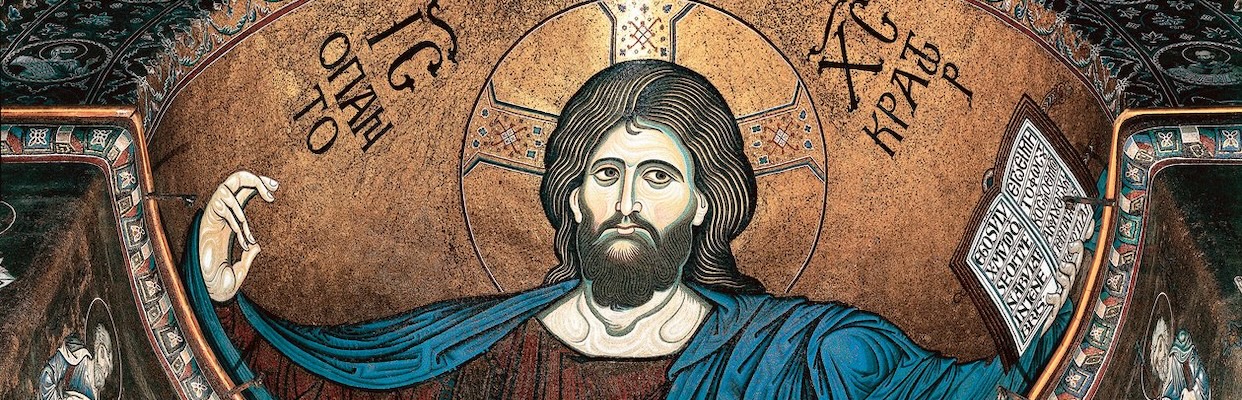
This topic is not usually found on pages like this, but given our name, it would be odd say nothing about it. The biblical word “icon” refers to anything that bears and reveals the image of God — especially people and communities gathered in his spirit. But of course, when we talk of praying with icons, we are usually referring to pictures of Christ and the saints that have been painted prayerfully in a unique traditional style for the purpose of assisting people in the prayerful contemplation of the mysteries of God.
The use of icons in prayer and worship has had a long but controversial history. The fear is that icons can become idols — that people begin worshipping the pictures rather than the God whose presence the picture seeks to illuminate. This fear is understandable, because icons are usually treated with great reverence and honour. People kneel before them, burn candles before them, and sometimes even kiss them. However, the devotion shown to them is not directed to the wood, stone or paint, but to the God whose presence in Christ or in a saint they represent. This is really no different from the honour many people show to a photo of a loved one — and no one confuses the photo with the reality of the person.
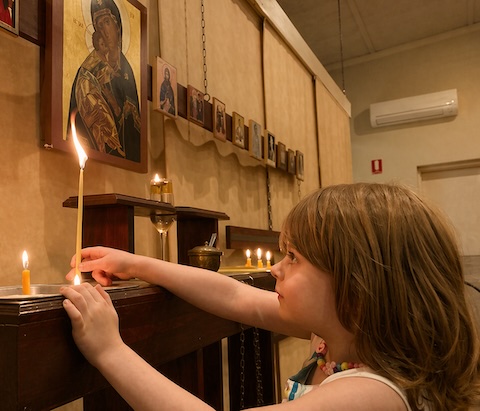
Praying while contemplating an icon is similar to writing a letter while looking at a photo of its intended recipient. No one is required to use icons in their prayer life, but some people find them helpful. In this church we have found that their presence in places of worship and prayer helps to focus our attention on the God who we have gathered to encounter.
If you would like to think more about the relationship between icons and the biblical commandment against making images, there are a couple of relevant sermons that have been preached in our church on the topic. You can find them here and here.
Beliefs about sexual diversity
LGBTIQA+ people and their families are fully and unconditionally welcome in our church, at every level of our life and ministry. This has been our formal position since the 1990s, and it has never wavered. That doesn’t mean you need to share that conviction to be welcome here, but it does mean that we are all required to honour it — refraining from speech or behaviour that would compromise the safety and welcome we are committed to providing.
Explaining our position fully involves some careful biblical and theological thinking. The story of the Bible is, among other things, a story of expanding welcome — a persistent pattern in which the circle of those who belong keeps being drawn wider than anyone expected. In Luke and Acts especially, this pattern is unmistakeable: suspect women, the Samaritan neighbour, the crippled and lame at the feast, the Gentile household of Cornelius. And most strikingly, the sexually othered Ethiopian eunuch, who asks “what hinders my being baptised?” Everyone knew that the answer to that question was spelt out in Deuteronomy, explicitly excluding him from the assembly of God’s people. But Philip recognised that the Holy Spirit had already moved on, and so willingly baptised him in the nearest waterhole. We read that trajectory as a living challenge to the church — including to ourselves. The fruit we have seen in the lives of LGBTIQA+ people who have been genuinely welcomed, loved, and freed to flourish in faith convinces us that the Spirit is still expanding the circle. We want to be part of that.
Nathan, our pastor, has written an essay setting out the biblical basis for this position in some depth. The essay was originally published as a chapter in an edited volume on same-sex marriage, and while it was written before marriage equality became law in Australia, the theological arguments remain relevant. You can read it here.
For those who want to understand our position in relation to the range of views held within the broader Baptist world, it is worth knowing that Baptists have never required theological conformity on contested questions — including this one. Our church’s position is not the majority position among Australian Baptists, but it is held with conviction and grounded in a serious engagement with scripture. We are not embarrassed by it, and we are not in the business of debating it with those who disagree. What we can say is that we have found the welcome to be life-giving, and the theology to be sound.
