
The history of our church
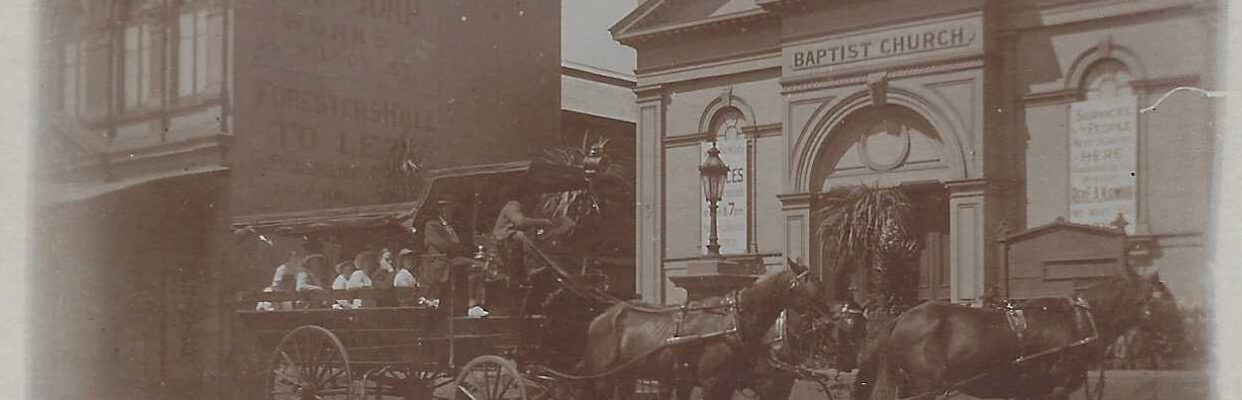
Our church was known for most of its history as South Yarra Baptist Church, and we are the fourth oldest continuing Baptist church in Victoria, following Collins Street Melbourne, Aberdeen Street Geelong, and Brighton.
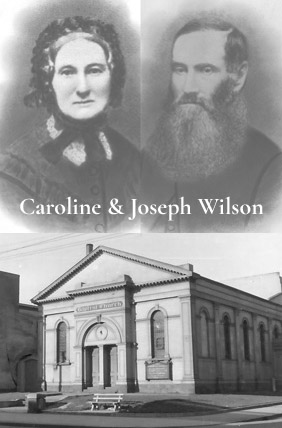
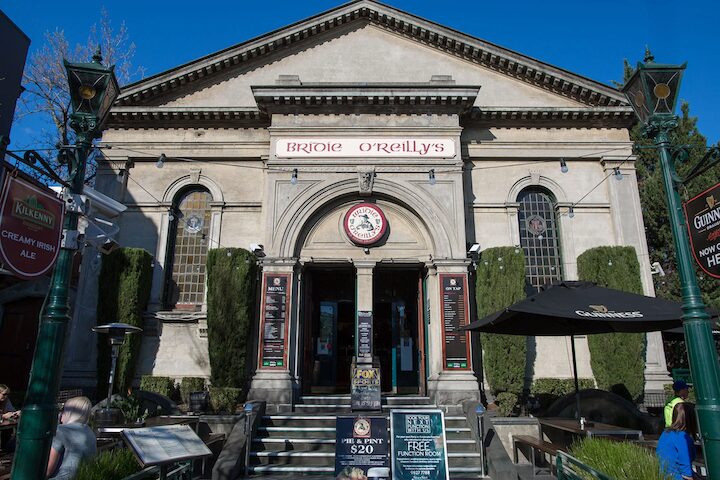
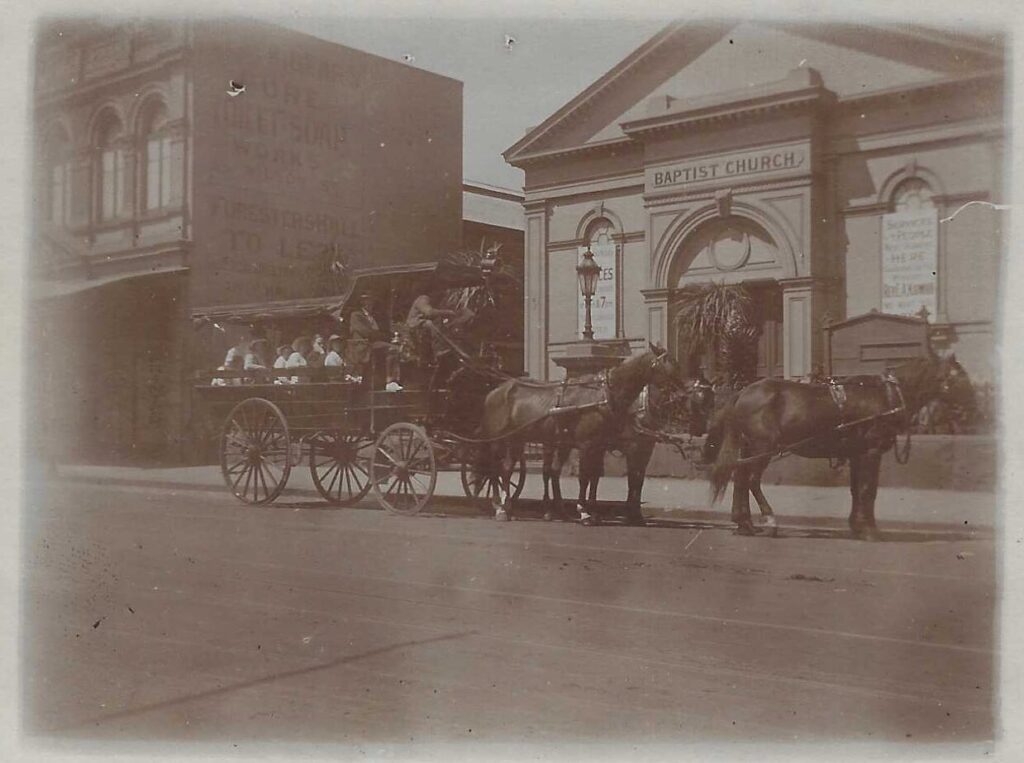
The church has had four previous locations. The first was a weatherboard building 8m x 13m, paid for by Mr Robert Kerr (a deacon of Collins St Baptist), on a narrow block in Brewer (now Charles) Street donated by Mr Joseph Pound. The church was constituted on 18 June 1854 with eight members, calling itself the First Baptist Church, Prahran. The church had an argument with Mr Pound over trust deeds for the property in 1855, so when Mr Joseph Wilson offered land in Chapel Street it accepted the gift and became the South Yarra Baptist Church. A new weatherboard building with 150 seats opened there, on 18 October 1857. In 1859, after some persuasion, Mr Wilson accepted the church’s invitation to assume the office of pastor. Another site in Chapel Street, at the corner of Wilson St, was purchased in 1866, and a substantial red brick church built to seat 450 (pictured). This third site was to be the church’s home for just over a century. The building still stands today and now operates as an Irish pub, pictured below right. One wonders what the folk from those days would make of this!
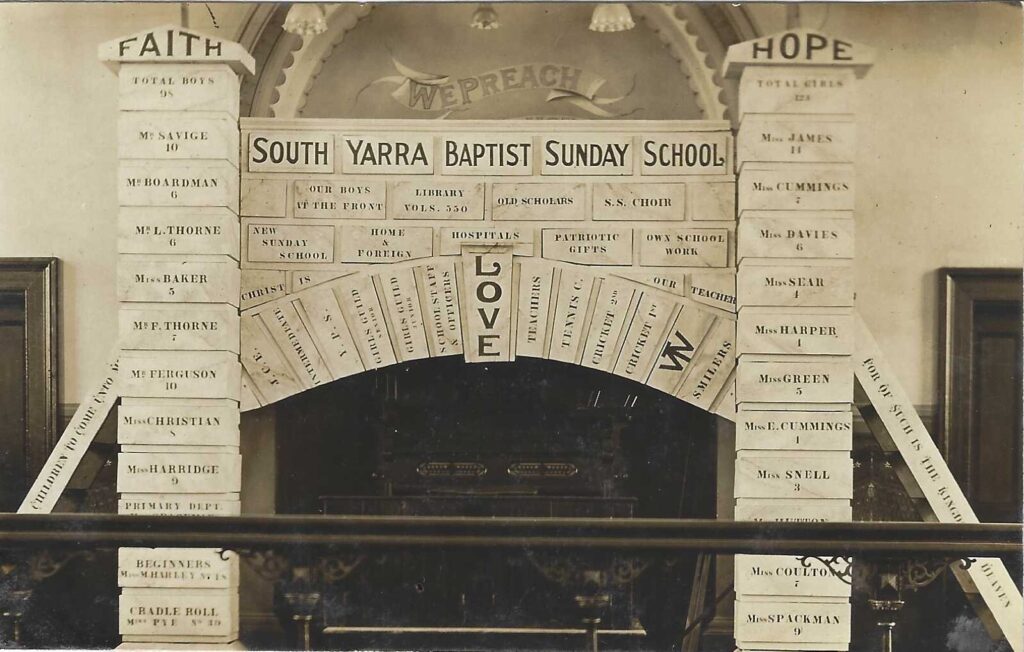
In 1857 SYBC proposed the formation of a Baptist Association, which later evolved into the present Baptist Union of Victoria. A preaching station was begun by South Yarra Baptist Church in 1888 in the old Court Room in Malvern; this became a church in 1896. In 1905 the 50-year-old church reached its peak membership of 255 people with 314 scholars in the Sunday school. From then the membership gradually declined and by the 1950s was down in the 30s.
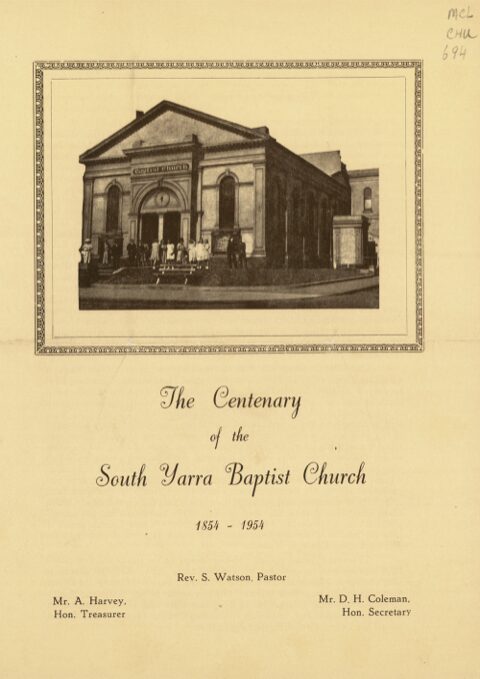
The picture on the right is the cover of a booklet published for the 1954 centenary and containing a bit more detail of the first hundred years. Click on the image to read the whole document (it’s only four pages).
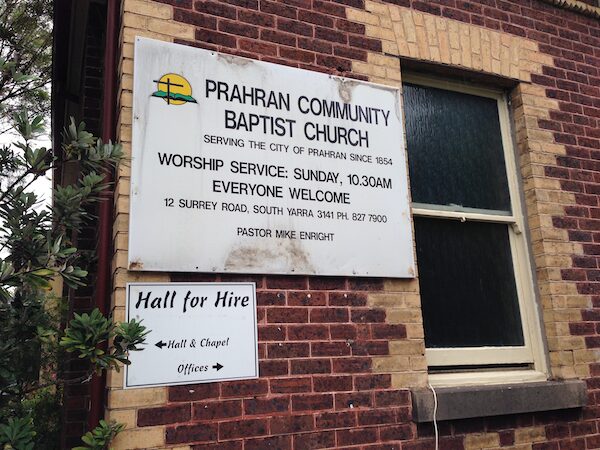
In the 1960’s, the church moved to 12 Surrey Road, where they found two houses on one title. The expressed aim of this move was to be able to help, support and evangelise the residents of the new housing commission estate across the road. A brick hall was opened on 14 July 1968, being used for worship and activities for children from the housing commission estate. In 1986 the name was changed to the Prahran Community Baptist Centre, and some walls in the house were removed to form a smaller chapel for worship, instead of holding it in the hall.
The church nearly closed down in 1993. There were very few members left and no pastor, just a different visiting preacher each Sunday. However the church did have significant savings (about $70,000). The handful of remaining members bravely decided to take a risk and search for a pastor, with the hope and specific aim of rebuilding the church. The search resulted in Nathan Nettleton being called as pastor. The church did slowly begin to grow again, but this was still no smooth road. The name was changed back to South Yarra Community Baptist Church in 1995 after the council boundaries were moved and the church was no longer in Prahran. In October 1997, after a major renovation, worship was moved back into the hall. Shortly afterward we were joined by several people from the closure of the Uniting Church in nearby Cromwell Road.
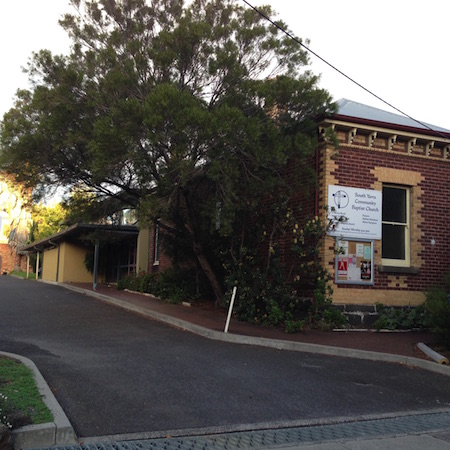
In 1998, the church narrowly survived the fallout when it became public that one of the deacons (as our congregational leadership group was then called) had been sexually harassing several women in the church. In the resulting atmosphere of depression and disillusionment, the church’s survival again became very tenuous. We instituted some pretty serious discussions about what it meant to be a church, and in the process we totally changed our constitution. We now had a clear and stark understanding of the fact that we are the church. Being church did not just involve “bums on seats”, but also an active and committed group who would do the jobs that needed to be done. From this grew the very radical-feeling concept of covenanting members, who would commit together for a specific period (6 months initially, later increased to 12) to be the church in this place – to make it happen.
In hindsight this probably set the stage for regrowth, but we were still looking for hope. We were so small we no longer needed a diaconate or church council; in fact we struggled to find a church treasurer and secretary among us. One thing we badly needed was some guidance from wiser and more experienced folk (most of us were well under 40), especially with exploring new directions and also conflict resolution. Thus the role of the Visiting Pastoral Overseers (VPOs) was created, to provide some help and guidance in these areas.
Still in the throes of trying to survive, we had begun to experiment with our worship style. Initially we tried a combination of our previous fare (“standard Baptist”, for want of a better description) and the liturgical style that is now our soul food (at that time this was being explored by a small group meeting on Wednesday nights). Trying to be the church and find our way had become exhausting for many of us, and this new service mix satisfied no one. We went on retreat together in July 1999 to see if we could find a way forward. The church was split into two groups, those who wanted to persist with changing the style and those who wanted to return to what we’d had previously. One (serious) suggestion was to simply close the church doors and see what happened. When it was realised that half of those who wanted to abandon the experimental service thought it hadn’t gone far enough, we decided to try going the “whole hog” and have a fully liturgical Sunday evening service, and to discontinue the morning service. One brave soul told us that he was pleased we were actually making a decision, but he wouldn’t be joining us because the proposed style of worship did not suit him. We are indebted to him for his forthright honesty and encouragement.
We tried the new liturgy for the first time as a whole church in August 1999. The air was pregnant with hope, expectation, and trepidation. We were complete beginners then, so there was lots of improvement to come over the following months and years. Even though our worship space was designed for something entirely different, it proved to be perfectly suited to the contemplative style liturgy. Here was hope for the future and nourishment for our souls, wedded to a sense of responsibility from our covenant.
For a long time we just hoped and hung on, going from one financial near crisis to the next (at one point getting to the stage where the bank balance was only a couple of thousand dollars). We felt we had found something life-giving which we wanted to share, but how? New people came, but some left before the end of the service, others only came a few times. The tide really began to turn when we started holding the Ancient Wisdom for Tomorrow’s Worship workshops. (These were grown from a seed of an idea planted by our Visiting Pastoral Overseers.) These educated us, and others, about our worship style, and both attracted and gently introduced people to the style without scaring them off so easily. A trickle of new people began coming, either having attended the workshops or having heard about it from someone who had. At one point this grew to feel like an inundation for the original tiny group, but gradually the congregation regained its sense of community as a larger group.
By 2006 the church had grown significantly. It was averaging around 50 people per week at the Sunday service, and was served by three part-time pastors. In the middle of 2008, disaster struck again when one of the pastors was stood down by the Baptist Union of Victoria and subsequently found by the BUV Professional Standards Tribunal to have been guilty of breaching the Pastoral Code of Ethics in five different areas, the most serious of which was described as “spiritual abuse”. That pastor never returned to us or to pastoral ministry anywhere else. The devastation caused by this was greatly compounded by the legal requirement that the details of the pastor’s actions not be made known to the congregation. The resulting confusion, suspicion, speculation and division saw the congregation fall apart again. Over the next year or so, many people left and attendance dropped back as low as the mid teens. Many of those who survived believe that the stability and healing powers of the Sunday liturgy were the only things that enabled the church to survive this period and eventually recover its joy and freedom and begin to grow again in both numbers and health.
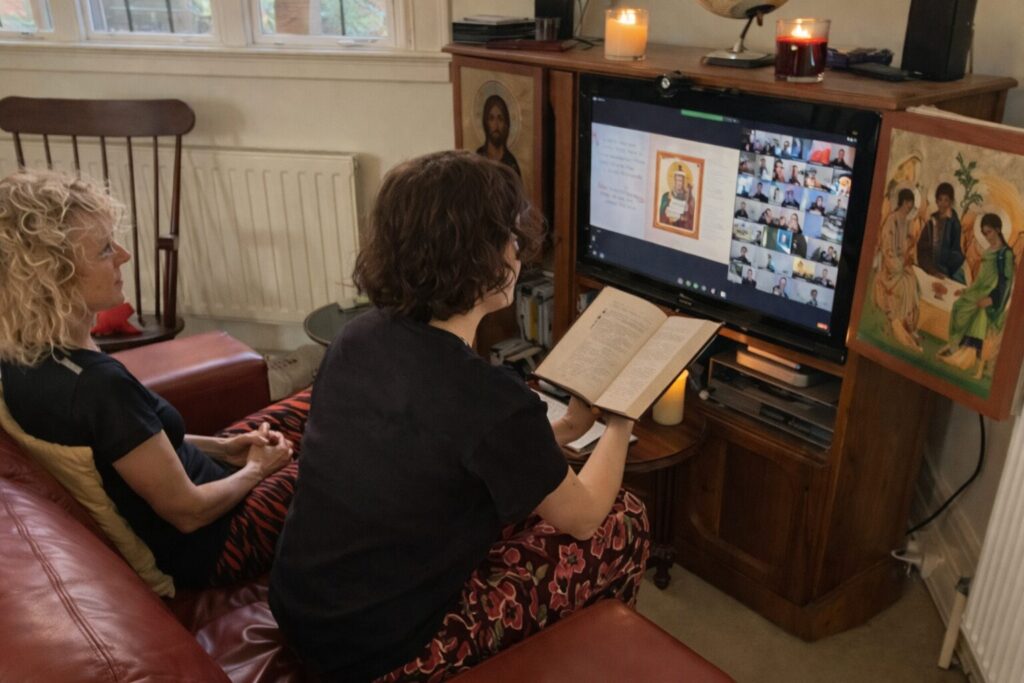
After a decade of relative stability and health, the next massive change came with the covid pandemic of 2020 and the extended lockdowns experienced in Melbourne. Shortly before the first lockdown, the congregation made the decision to take the Sunday liturgy online because the growing fears of infection were increasingly keeping people away. As it turned out, worship was only online one week ahead of the compulsory lockdown. Everyone was surprised at how well the church’s liturgical style of worship adapted to the online environment. Undoubtedly, pastor Nathan Nettleton’s training in liturgical studies gave the church an advantage in being able to identify what most mattered and so avoid the pitfalls of online worship that many churches fell into. Most importantly, the practice of a highly participatory liturgy in which everyone can contribute their voice was able to be reproduced online. It was definitely a live interactive event, not a pre-recorded stream to be consumed alone. Before long, the Sunday liturgy was joined by a pattern of online daily prayer liturgies, three times a day, six days a week. The combination of shared prayer and social chat after each liturgy connected people to one another more regularly than they had experienced before and strengthened relationships. And there was a significant increase in the Sunday attendance as people who had previously moved far from our neighbourhood were able to rejoin us online.
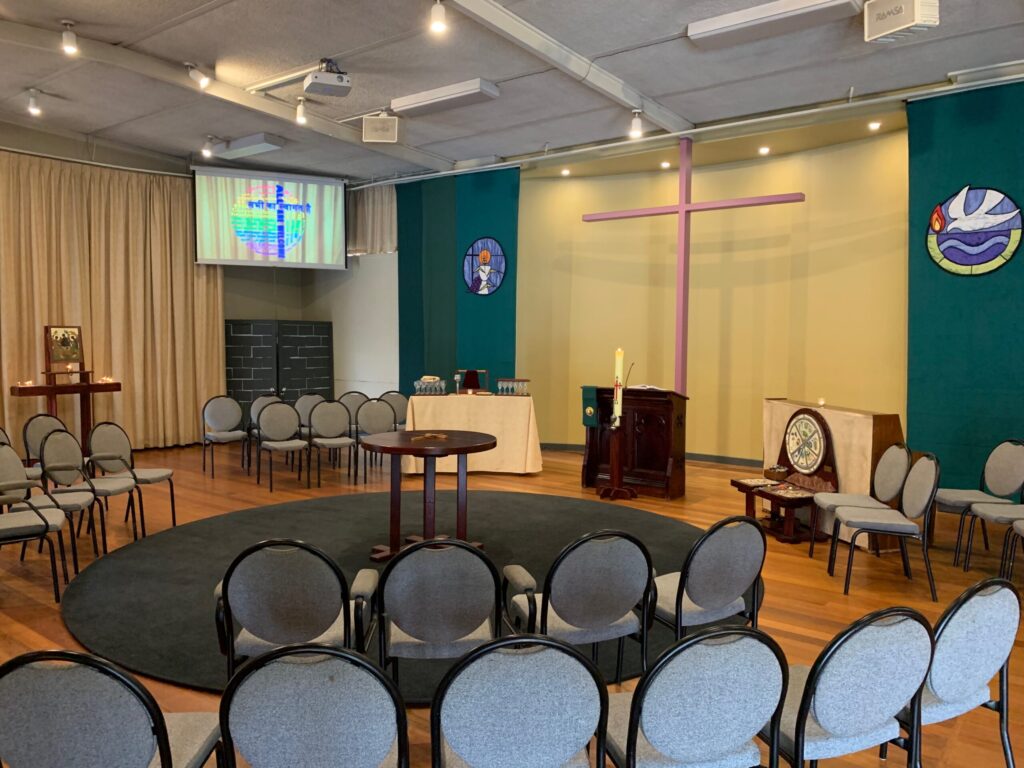
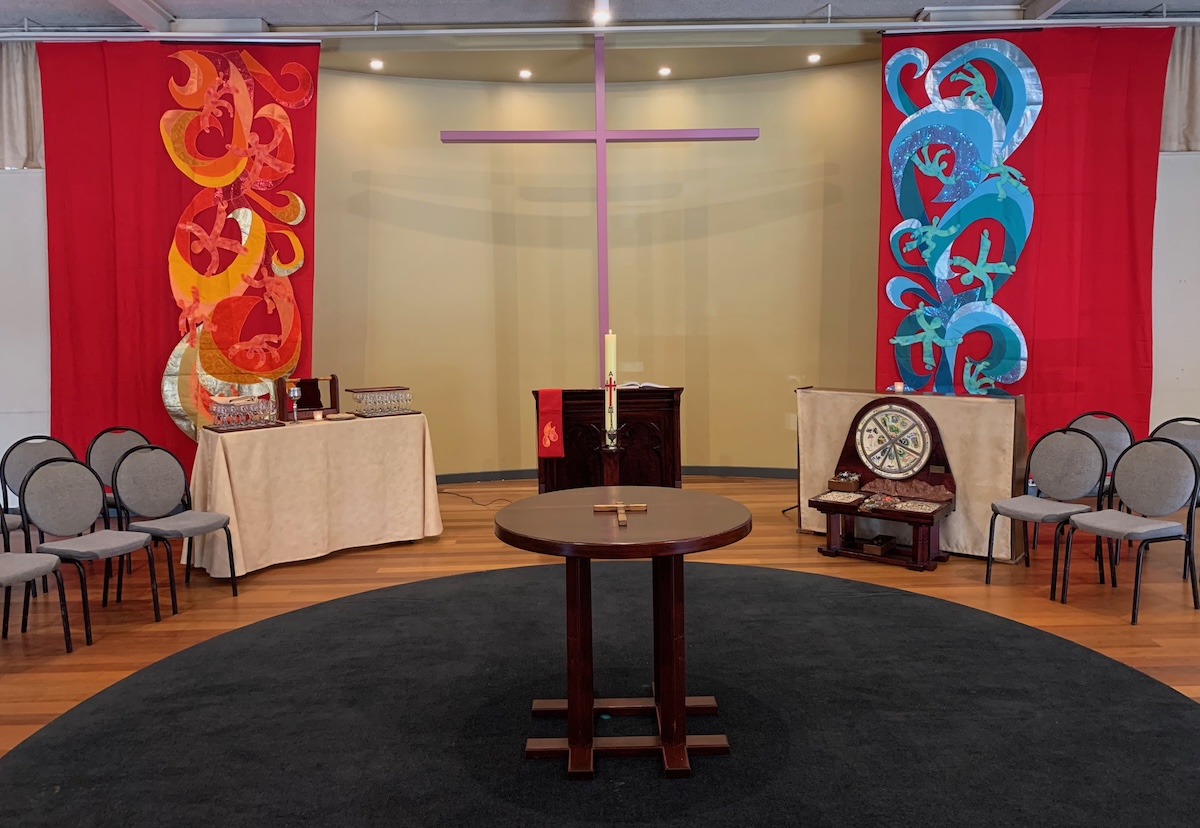
Our church hall set up for worship in different seasons, c.2019
Within a few months of commencing regular online worship, some members of the congregation began speculating that this might be a permanent new future that God was calling us to, and thus began a lengthy period of experimentation and discernment. Initially it was assumed that we would end up with a form of hybrid worship, but the church was unable to find a way of achieving that that didn’t render either the online participants or the physically gathered participants second class citizens. Equality of access and participation had long become a non-negotiable value of the church. In June 2021, the congregation voted unanimously to not return to the building, but to commit for the foreseeable future to a pattern of church life that involves all principal worship services and governance meetings being conducted online.
The church continued to flourish in its new online form, and the growth in numbers no longer had geographical constraints. By 2024, 20% of the congregation were joining from outside of Melbourne (regional Victoria, interstate, and overseas), and 25% had no experience of the pre-covid, physically gathered worship of this church. This created the unexpected dilemma of needing to be careful that physically gathered social events weren’t becoming something that left a significant group feeling excluded by geography.
A review in 2024 found that there was still no significant desire to return to the building. Most people could identify things they missed about physically gathered congregational life, but they could identify more things that they weren’t willing to lose about online life. Thus conversations began about relinquishing the church building in South Yarra.
After a year of discussions and negotiations, the keys were handed over to the Earthen Vessels Church, a predominantly Vietnamese Baptist congregation, and they began regular worship there in July 2025.
The relinquishing of the building made the question of the church’s name both urgent and meaningful. South Yarra Community Baptist Church had served well for thirty years, but with no one in the congregation living in the South Yarra neighbourhood and the building gone, the name had become a description of something that no longer existed. The search for a new name proved more difficult than expected — it goes to the heart of a congregation’s identity — but what emerged was richer than anyone had anticipated. The congregation voted in early 2026 to adopt the name Open Icon Baptist Church: a name that holds together the congregation’s theological depth, its online reality, and its longstanding commitment to a welcome without borders.
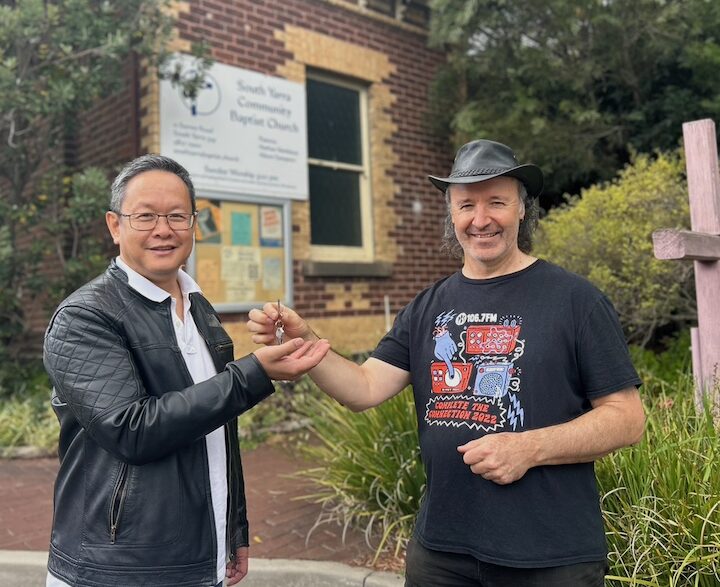
From eight members constituted in a weatherboard building in Prahran in 1854, to an online congregation scattered across Australia and beyond in 2026 — the journey has been anything but smooth. But the church is still gathering, still learning, still following Jesus together.
Pastors of this Church through the Years
|
1859 |
Jas Drewe |
|
1859 – 1860 |
Joseph Wilson |
|
1860 – 1868 |
D Rees |
|
1868 – 1869 |
W A Claxton |
|
1869 |
W J Cother |
|
1869 – 1873 |
T C Davis |
|
1874 – 1875 |
G Brockway |
|
1875 – 1881 |
J Wolfenden |
|
1881 |
W J Mathams (Supply) |
|
1882 – 1885 |
F Page |
|
1886 – 1891 |
R Williamson |
|
1892 – 1894 |
F J Malyon |
|
1896 – 1901 |
J H Pryce |
|
1902 – 1905 |
P W Cairns |
|
1907 – 1911 |
W J Eddy |
|
1912 – 1914 |
L E Tranter |
|
1915 – 1917 |
E A Kirwood |
|
1918 |
H G Scholefield |
|
1919 – 1921 |
L E Tranter |
|
1921 – 1925 |
H G Hackworthy |
|
1925 – 1932 |
R W Dobbinson |
|
1932 – 1943 |
H MacDonald |
|
1944 – 1946 |
McIntosh Brown |
|
1946 – 1954 |
Sam Watson |
|
1955 – 1958 |
Gordon Merry |
|
1958 – 1962 |
L J Austin |
|
1962 – 1973 |
Ray L Sprigg |
|
1974 |
Bruce Rumbold |
|
1974 – 1978 |
R Kingsley Smith |
|
1978 – 1990 |
Stewart Culbard |
|
1992 |
Mike Enright |
|
1994 – present |
Nathan Nettleton |
|
1995 – 1998 |
Ron Ham |
|
2002 – 2007 |
Garry Deverell |
|
2002 – 2008 |
Jill Friebel |
|
2014 – 2024 |
Alison Sampson |